Every feeling leaves a clue
in your child’s body
Body Detective guides kids through gentle mindfulness steps. It is designed to help children notice what their body is feeling, name their emotions, try regulation tools, and learn what helps them feel better.
Try it now. 7-day free trial.
Therapist? See the clinician caseload tools
4 to 11
The check-in
Five steps, about two minutes
The same sequence an occupational therapist runs in session, rewritten for a child to do with a grown-up beside them.
- Step 1
Notice the clues
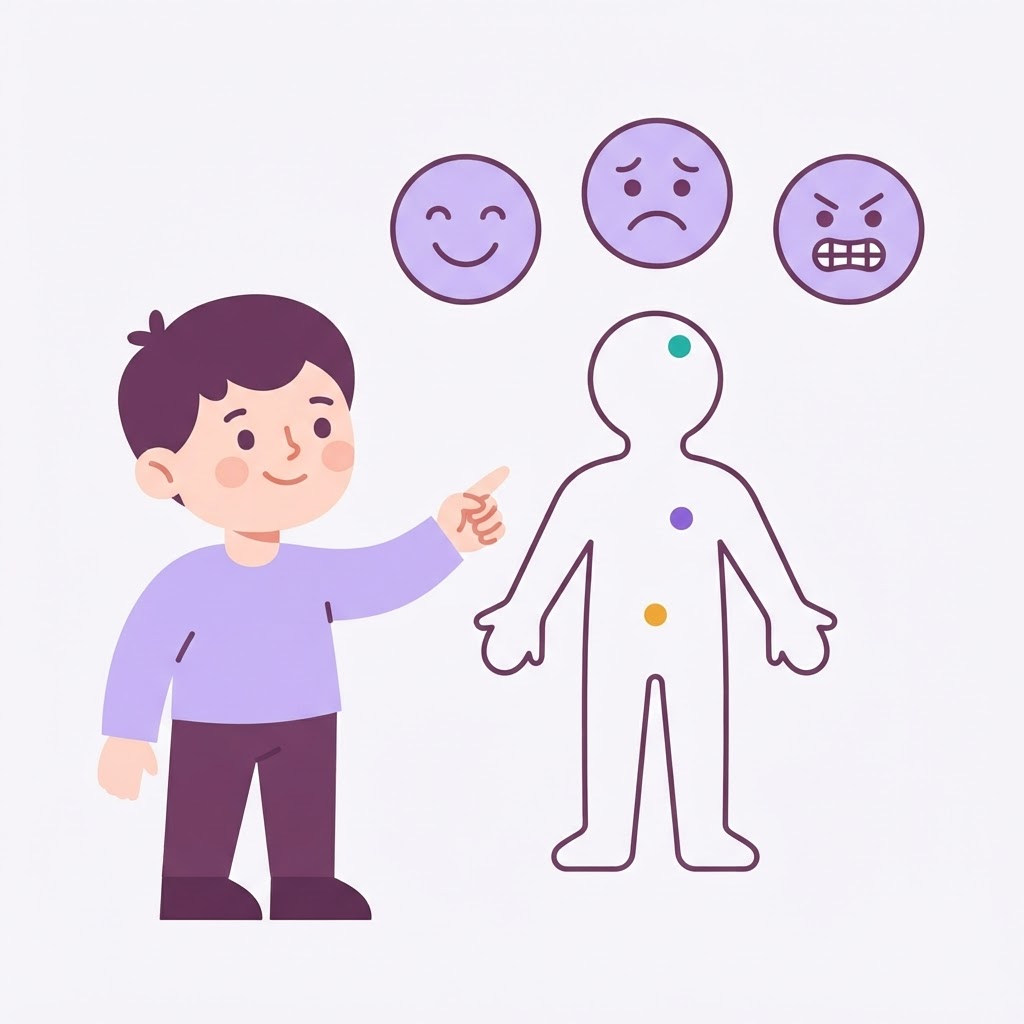
Kids tap what their body is doing: tight jaw, fast heart, wiggly legs.
- Step 2
Name the feeling
Clues get matched to feelings, so the emotion has words attached.
- Step 3
Size the feeling
Small, medium, big, or huge, because size changes the response.
- Step 4
Pick a tool
Breathing, movement, or a sensory strategy from their Calm Kit.
- Step 5
See what helped
One tap logs the outcome, so patterns emerge over weeks, not guesses.
Two ways in
For families
Use it at home on a phone, tablet, or laptop. No therapist required to get started.
- Guided check-in for one or several children
- Calm Kit with breathing, movement, and sensory tools
- Detective Academy scenarios to practice reading clues
- Patterns view showing what sets off big feelings and what helps
For clinicians
Invite the families you see and follow their check-ins between sessions.
- Caseload dashboard with each child's recent clues and feelings
- Per-child patterns and progress reports you can share
- Resource hub for handouts, videos, and home programmes
- Weekly home missions tied to the goals you set
Plans
Simple pricing, no surprises
Invited by your child’s therapist? Your family access is FREE.
Family Plan
Try 7 days free, then one payment
- Unlimited body check-ins
- Calm Kit with breathing and movement tools
- Detective Academy practice scenarios
- Progress patterns for your child
- Visual schedules you can build together
Clinician Plan
Monthly subscription for therapists
- Unlimited clients on your caseload
- Invite families and co-treat with other clinicians
- Session-by-session progress reports
- Share resources and home missions
- Regulation alerts when a child needs support
Parent-controlled access
Only a clinician you invite can see your child's check-ins, and you can revoke that access yourself.
Export anytime
Download a copy of your child's progress from their page whenever you want one.
Delete it yourself
Remove your account and its records in Settings. No support ticket, no waiting.
Payments handled by Stripe. Cancel a clinician subscription anytime.
FAQ
Questions we hear a lot
Still wondering something? Reach out from the help menu inside the app once you sign in.

No. Body Detective is a practice tool your child can use between sessions. It was built by a pediatric occupational therapist to make body awareness, feeling words and calming strategies part of everyday life, alongside the goals you are already working on.
A support tool, not a diagnosis
Nothing. If your child's therapist uses Body Detective, they invite you and your family access is free. You create your child's profile, then send them a link request to approve, and everything they assign shows up in your dashboard.
Free for families on a clinician's caseload
Most families use it with children roughly 4 to 11. Younger children do best with an adult reading the steps aloud and helping them tap through; older children often run a check-in on their own in a few minutes.
Ages 4 to 11, with an adult nearby for younger kids
Five short steps: notice what is happening in the body, name the feeling, size it, choose a calming tool, and note what helped. Each check-in is saved so you and your therapist can spot patterns instead of guessing.
About two minutes, start to finish

A caseload view for every child you work with, a shared resource hub for handouts and videos, home missions for between sessions, and progress views across check-ins and practice sessions. It is a monthly subscription and you can cancel anytime.
For pediatric OTs, SLPs and mental health clinicians
Ready to solve the mystery of big feelings?
Seven days free, then $14.99 once. No subscription for families, and free access when your child’s therapist invites you.
Ages 4 to 11 · built by a pediatric OT